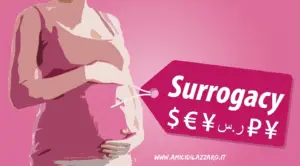
At the heart of every surrogacy agreement lies the contract, where economic interests and personal desires intersect. It is here that an important contradiction emerges: the birth of a child, which involves emotional and human bonds, takes place within a framework of money, markets, laboratories, catalogues, and contracts. Pregnancy and childbirth thus become part of an economic agreement in which reproductive services are purchased, and the child risks being regarded as part of what is being bought.
It is precisely within the contract that the inequality between the parties becomes apparent: on the one hand, those with the financial resources to commission a surrogacy arrangement; on the other, the woman who carries the pregnancy, who may find herself in a more vulnerable position, particularly for economic or social reasons. This disparity may affect her freedom of choice, her ability to negotiate the terms of the agreement, and her decision-making power during pregnancy.
The freedom to enter into contracts is a fundamental principle of democratic societies, but it cannot be absolute. Under modern law, it is subject to respect for the dignity, bodily integrity, and freedom of the persons involved. The State, as guardian of the common good, must establish ethical and legal limits to prevent contractual arrangements from becoming instruments of domination or exploitation.
These limits do not negate freedom; they make it possible.
The boundaries established to protect individuals enable contractual relationships to develop in a fair and balanced manner.
The prohibition on the sale of organs or body parts, even with consent, demonstrates that not everything can be made the subject of economic exchange. Similarly, laws prohibiting or restricting the buying and selling of sexual services in various jurisdictions reflect the principle that the human body should not be reduced to a commodity, even where an agreement exists between the parties.
Inequalities in Surrogacy Contracts
Surrogacy highlights profound inequalities:
- the imbalance of power between individuals belonging to different socioeconomic classes;
- the concentration of health risks on the woman who carries the pregnancy;
- the risk that certain fundamental rights of the child may not be adequately protected.
With regard to the latter issue, the question arises of the child’s right to know their origins and biological history, particularly in cases where the identity of the so-called “donor” remains anonymous.
There is also the question of protecting the child’s right to maintain relationships with the people involved in their birth and, in particular, with the woman who carried them in her womb for nine months. Maternal contact and breastfeeding may also play an important role in the formation of emotional bonds and in the child’s development.
Contractual Limits and Social Justice
Just as a contract whose object is the commission of a criminal offence cannot be validly concluded, so too the limits placed on contractual freedom in surrogacy—which we hope may ultimately take the form of prohibitions—are intended to safeguard justice and human dignity.
The experiences of women who resort to surrogacy demonstrate the importance of examining the relationship between freedom of contract, economic circumstances, and the protection of the individual. Market logic alone cannot be regarded as sufficient to guarantee respect for the dignity, health, and rights of all those involved.
Regulation, Altruism, and the Global Dimension
Some argue for stricter regulation or advocate altruistic surrogacy. However, even in altruistic surrogacy, important questions remain concerning the woman’s freedom of choice, her potential vulnerability, and the protection of the child’s rights.
At the international level, cross-border surrogacy can exacerbate inequalities, particularly when women living in conditions of economic hardship become involved in reproductive arrangements commissioned by considerably wealthier individuals, including those from Western countries.
When economic need affects the ability to choose freely, there is a risk of perpetuating patterns of exploitation and inequality reminiscent of those of the colonial past.
From this perspective, the answer does not lie in making the reproductive market more efficient, but in creating social and economic conditions that prevent material hardship from becoming a means of exerting pressure on people’s bodies and choices.
Conclusion: Towards Universal Protection of Human Dignity
Many clauses contained in surrogacy agreements may raise serious ethical and legal concerns, particularly when they affect the rights and interests of the child. We therefore consider it necessary for clauses that infringe fundamental rights to be subject to rigorous legal scrutiny and, where the relevant legal grounds are met, to be declared null and void.
The issues to be addressed include the protection of the child’s right to know their origins, the legal recognition of parentage and child support obligations, and the possibility of preserving, where this serves the child’s best interests, the continuity of emotional bonds with the people involved in their birth.
We hope that, at the international level, the regulation of surrogacy will progressively become more restrictive, ultimately leading to a worldwide ban on this practice.
We believe it is necessary to call into question, alongside surrogacy, the permissibility of heterologous assisted reproduction in all its forms, subjecting both practices to a thorough ethical and legal assessment
Paolo Botti
© Tutti i diritti riservati. Riproduzione consentita solo chiedendo permesso a info@amicidilazzaro.it
(non verrà concesso a siti con pubblicità/ads o per usi commerciali)
© All rights reserved. Reproduction allowed only with permission from info@amicidilazzaro.it
(it will not be granted to sites with advertising/ads or for commercial uses)


